
Murmus System
Adaptive dual-use
mobile defence
One mobile C-UAS complex: sensors, a C2 decision layer, soft kill and hard-kill effectors, under one contract. Each effector shot costs less than the drone it stops.
14
Next Generation
Dual use Mobile
Defence
MURMUS is an integrated, network-centric defence system. Combining command, radar and interceptor capabilities, it detects threats earlier, responds faster, and neutralises airborne targets with precision.
The full engagement chain.
In one system
Detect
Layered sensors detect the threat early.
Sensors on the C2V
Classify
C2 fuses every sensor into one track and identifies objects in the airspace.
C2 software in the C2V
Track
C2 evaluates the threat, predicts its trajectory and selects the most suitable effector.
Target data C2V → ELV
Neutralise
The operator authorises: jam or spoof first, a hard-kill effector if needed.
C2V jams · ELV launches first, C2V joins
01Detect
Early vision.
Instant action.
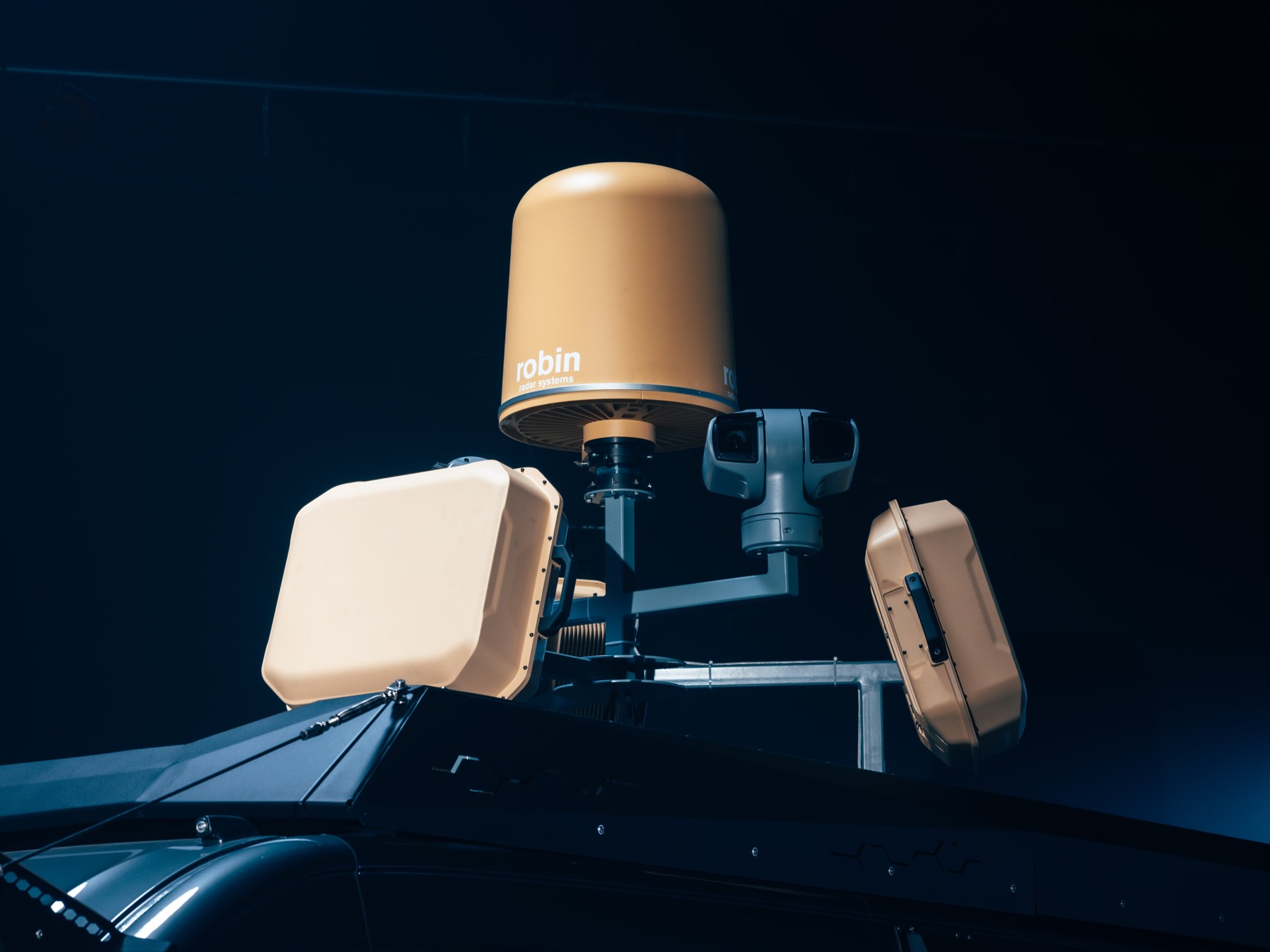
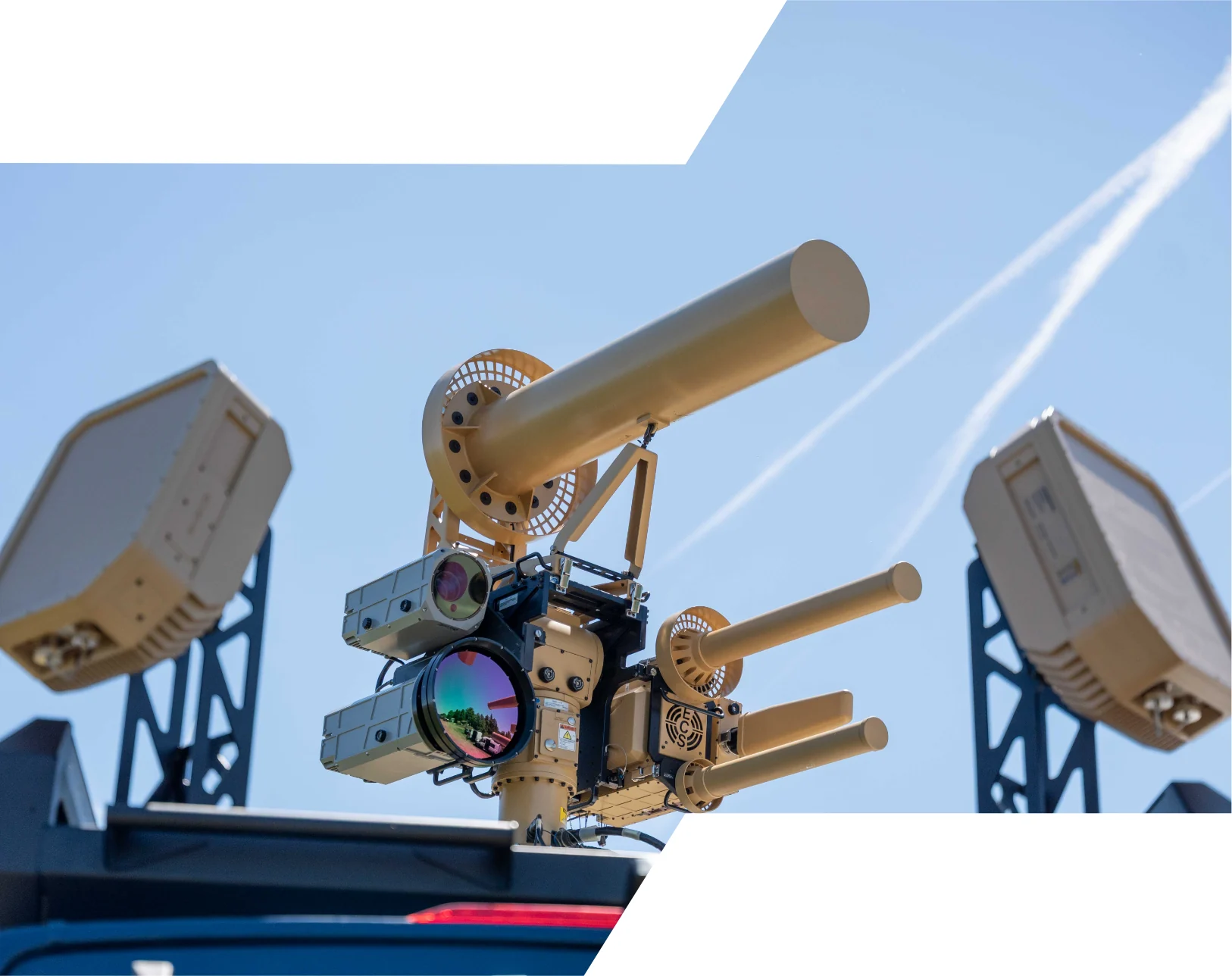
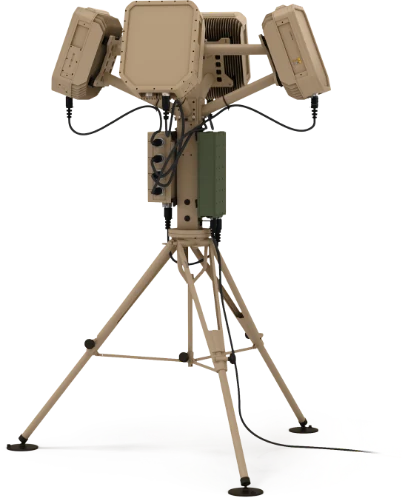
Passive RF detects the drone and its operator, identifies the drone’s type and cues the jammer, all without emitting anything that could give away its position. 4D radar covers what stays silent, tracking the range, bearing, height and speed of non-emitting drones day and night.
EO/IR cameras confirm and identify targets found by radar or RF, even at night, and feed terminal guidance to the effectors. Acoustic sensors add short-range cover against low-flying drones near the site by picking up engine and propeller signatures.
More stats +Less stats −
law allows
02Classify
The system proposes.
The operator decides.
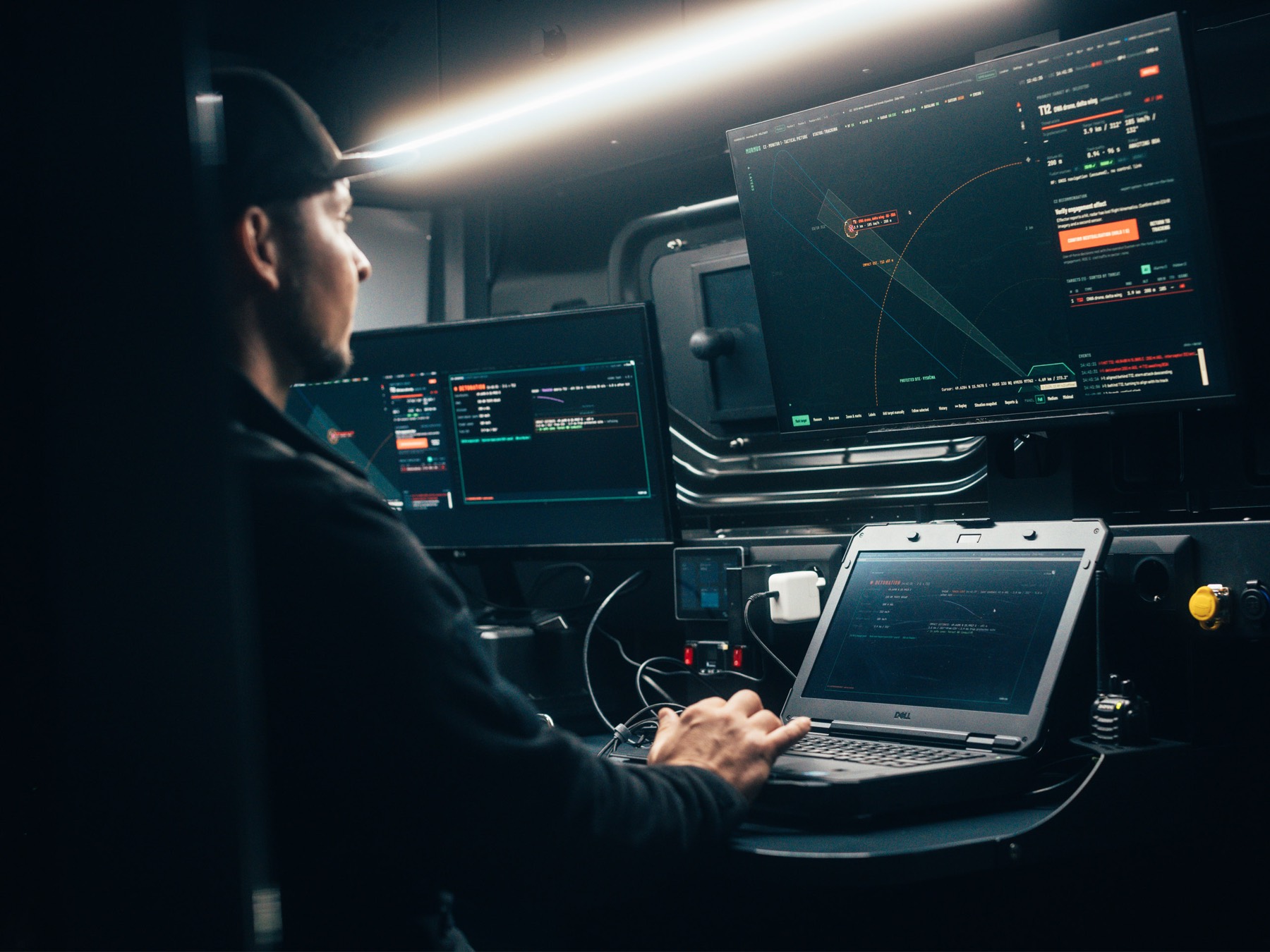
MURMUS C2 fuses every sensor into one track per object and assesses each threat from five kinds of evidence: how it moves, what it emits, what the cameras see, what the microphones hear and how it behaves toward the protected site. It predicts the trajectory, rates danger and urgency, and counts down the time until the main threat reaches the site. Every classification shows its confidence and evidence, and the response is only proposed: the operator approves, modifies or aborts it. AI classification is in development, with testing and deployment in 2027.
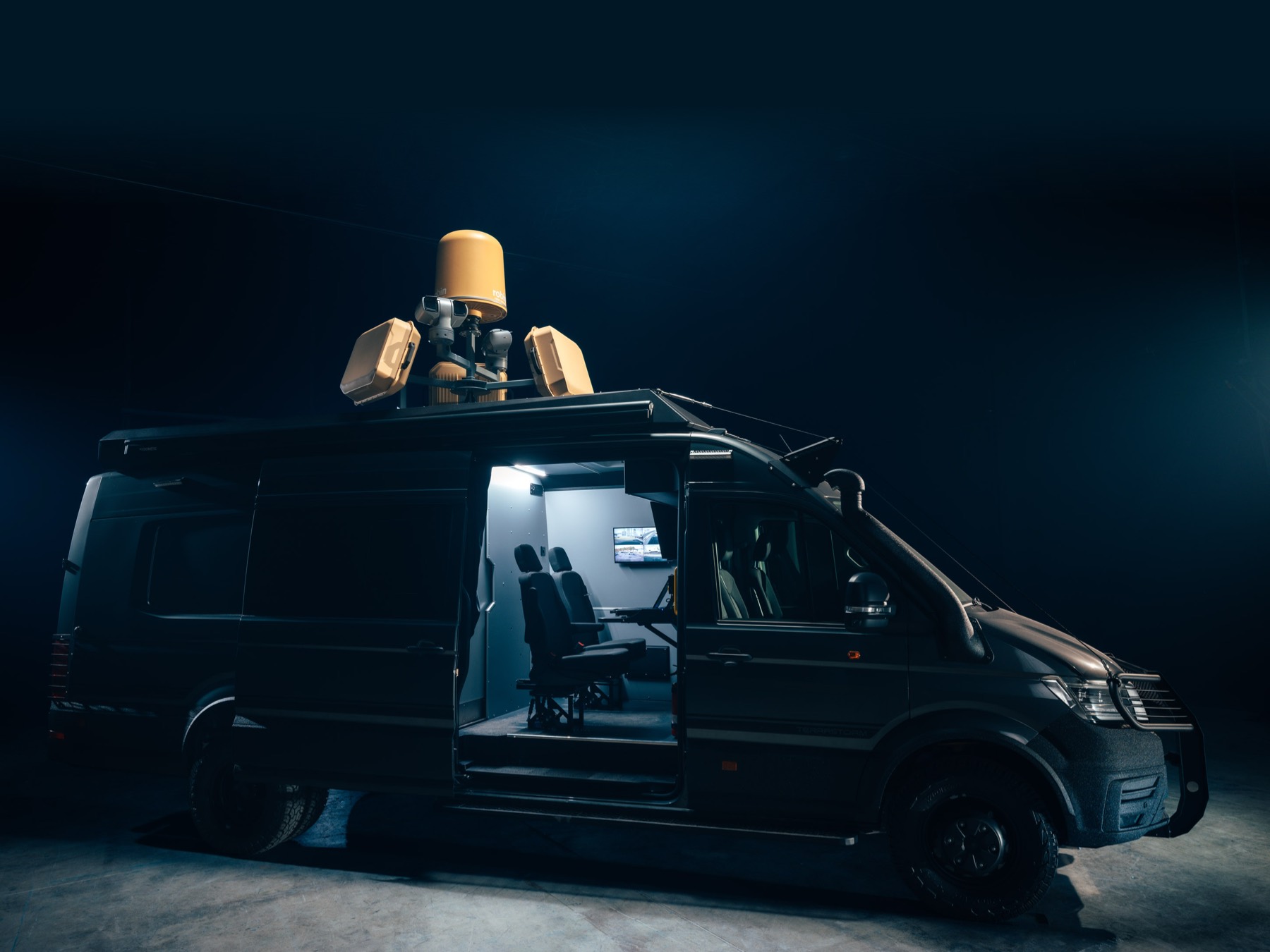
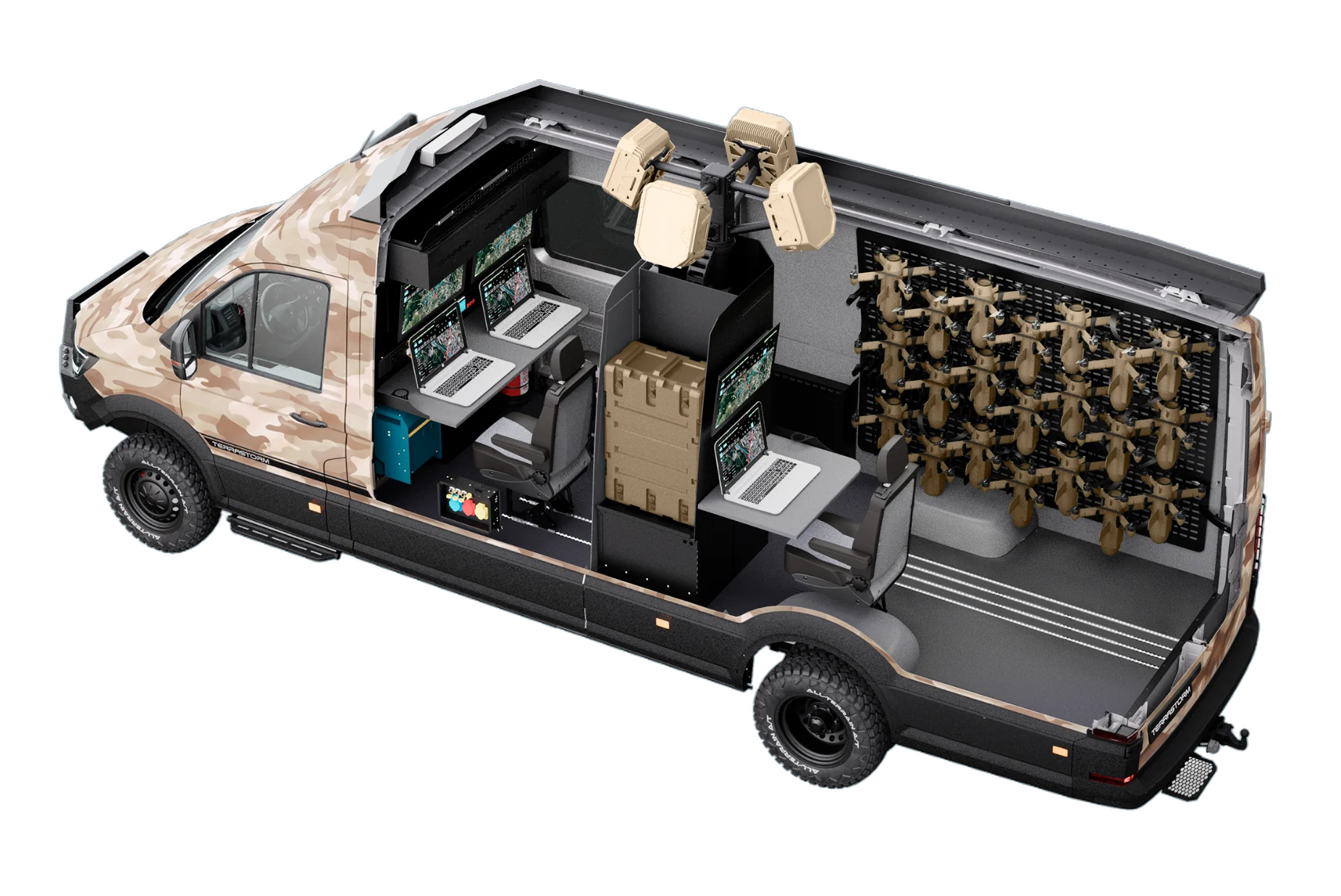
The Command and Control Vehicle is the home of this picture: up to three operators in a 4×4 van with three workstations, dual 27” monitors, and thermal and sound insulation, so the command post works on the move. The full sensor suite and 20+ own effectors are integrated on board, and tactical radio, satellite communication, a real-time data link and autonomous power keep it connected and self-sufficient. Several complexes and external feeds can share one air picture over NATO interfaces, and each keeps working on its own if the links drop.
Command and Control
Vehicle (C2V)
Strike Vehicle
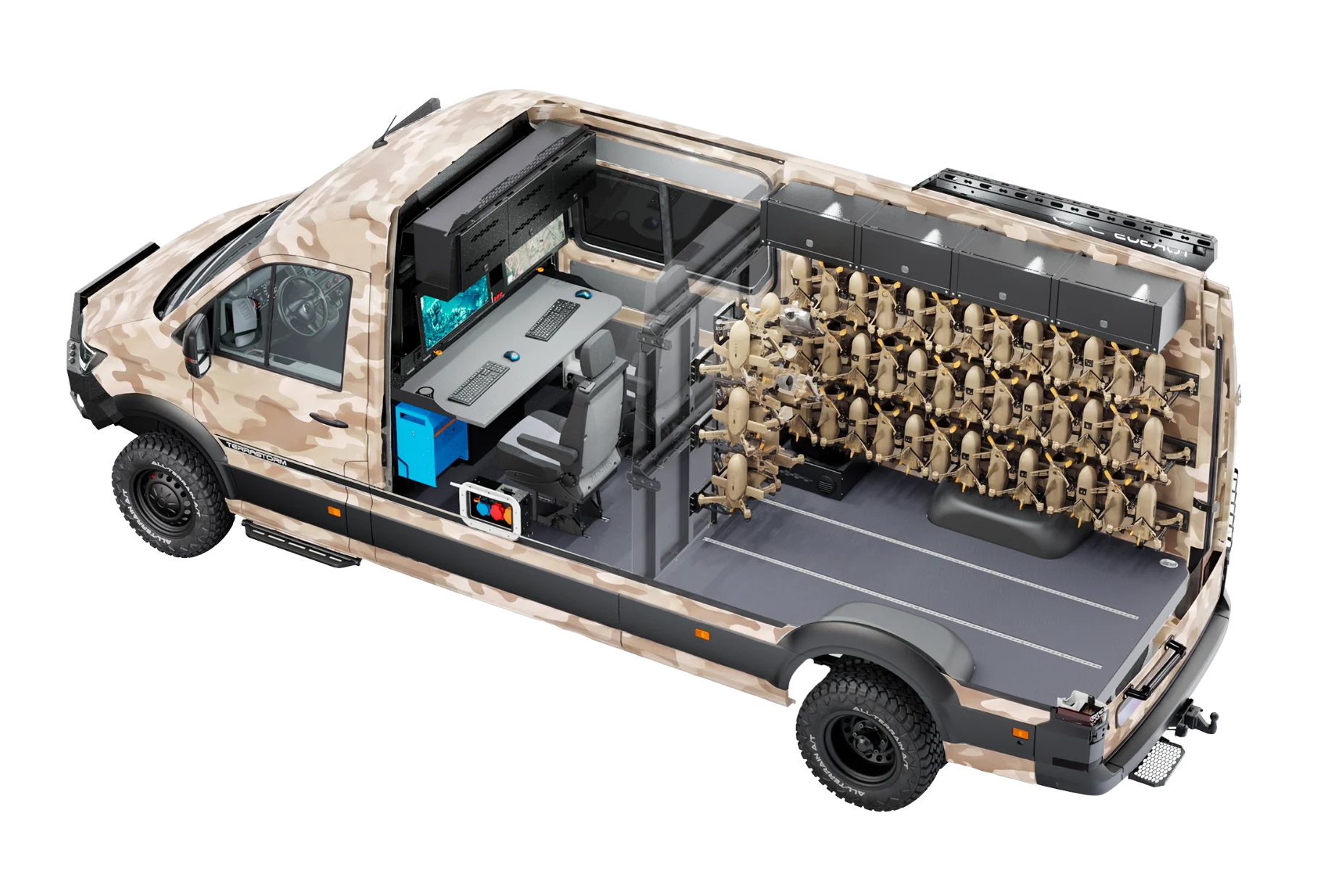
Standard 1+2 set: one Command and Control Vehicle (C2V) with integrated sensors, plus two Effector Launch Vehicles (ELV), together carrying 80+ effector drones, on a common 4×4 platform. Crews are trained and certified before delivery.
03Track
Rapid response.
Targeted strike.
The interceptor drone delivers rapid autonomous engagement of aerial threats, combining high-speed flight with precision to neutralise targets at extended range. Designed for seamless integration into the MURMUS network, it receives real-time target data directly from the shield radar, enabling fast, coordinated response with minimal operator input.
Hard kill for FPV, fibre-optic FPV and one-way attack drones, cued by C2 and shown live in May and June 2026. The operator authorises every engagement.
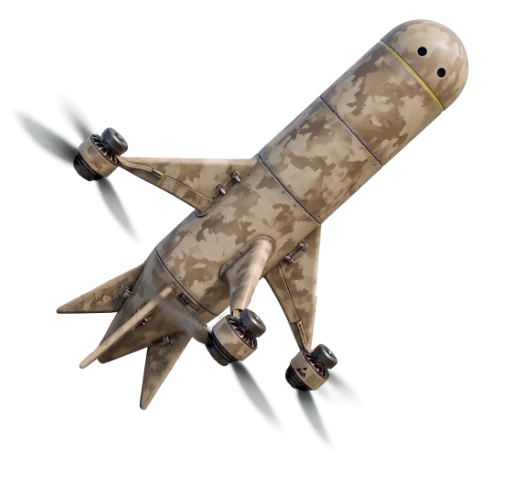
Indicative; subject to final configuration, environmental conditions and engineering validation. No guarantee of operational outcome.
Thermal camera onboard.
Picks up the target’s heat signature by day and night, through haze and smoke, and feeds the pilot view and terminal guidance.

EU-made warhead
Made and integrated in the EU by a munitions supplier with 30+ years in the industry, own certified storage and full export documentation.
04Neutralise
Combat-proven
effectiveness
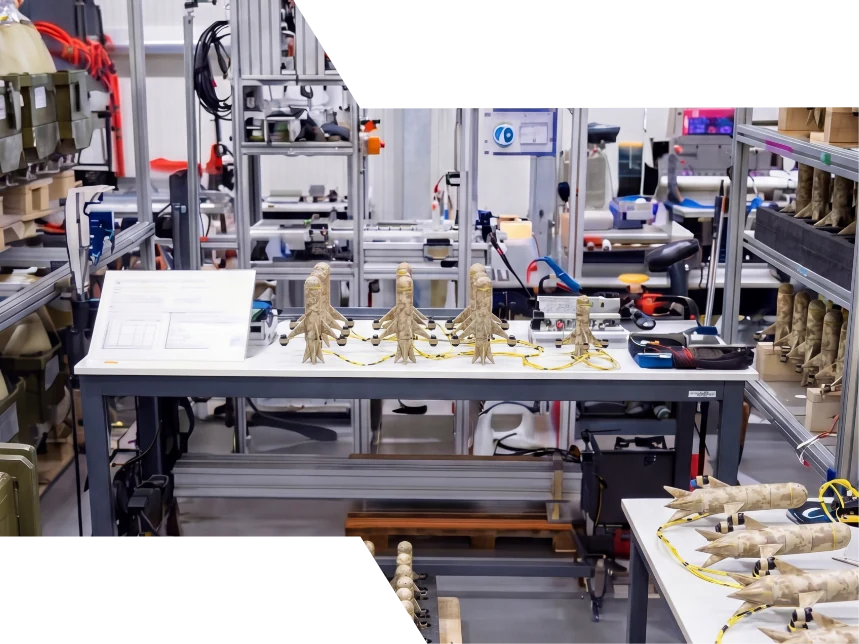
The advanced interceptor features an optimised aerodynamic design, developed and validated under real operational conditions for fast and precise engagement of aerial threats in modern C-UAS missions.
Its warhead and explosive charge are manufactured and integrated within the EU by an experienced munitions company with over 30 years of expertise, certified storage facilities and all required certifications and documentation for compliant military trade.
Deployment & Support
Training, logistics
& supply.
When the system needs attention, the customer reaches one phone number and one accountable team. After-sales service is delivered under contractual SLAs that define response times for remote support, on-site intervention, and critical spare resupply, all calibrated to the customer’s operational tempo and needs. Czechia Systems’ field service engineers, supported by accredited regional partners, cover deployments worldwide.
01
Operator training
Crews are trained and certified to full capability before the system is handed over, so the first day of operation is not the first day of practice. Training runs from basic operation of the sensors and command software to advanced tactical scenarios, including multi-drone attacks and degraded conditions. Refresher courses follow as the system and the threat evolve.
02
Technical training
Maintenance crews learn to keep the system running in the field: vehicle systems, the sensor mast, communications, launch equipment and routine checks on the interceptors. The aim is first-line maintenance by the customer’s own personnel, with Czechia Systems engineers called in for deeper interventions. Technical documentation, maintenance schedules and spare-part lists are part of the delivery.
03
Spare parts & consumables
Interceptors are consumables. Stock levels are agreed at contract signature and replenished as they are used, so the launch vehicles do not run empty. Spare parts for vehicles, sensors and launch equipment follow a defined list with agreed delivery times for critical items. Warheads are stored and shipped by the EU munitions supplier from its own certified facilities, with full documentation for each batch.
04
Deployment logistics
Getting the system to the customer is part of the delivery. Czechia Systems handles export licensing under Czech and EU export control rules, including the authorisation required for warheads, and prepares the transport documentation. The set drives to its first deployment on its own wheels; no transporter or prepared site is needed. Handover takes place on site, with the certified crew already in place.
05
After-sales service & warranty
When the system needs attention, the customer reaches one phone number and one accountable team. Service is delivered under contractual SLAs that define response times for remote support, on-site intervention and critical spare resupply, calibrated to the customer’s operational tempo. Field service engineers, supported by accredited regional partners, cover deployments worldwide. Warranty terms follow the contract.
06
Lifecycle management (10+ years)
The threat changes every season, so the system has to change with it. Over the contract term the customer receives software updates to the command and classification layer, hardware upgrades as they become available, and a new interceptor generation every year. Licences and certifications are kept current by Czechia Systems. The customer buys a capability that stays current, not a snapshot of 2026.
Frequently
asked questions
What does the MURMUS system include?
The standard set is one Command and Control Vehicle with integrated sensors and two Effector Launch Vehicles carrying interceptor drones, all on a common 4×4 platform. The command vehicle runs the C2 software, jamming and spoofing. The delivery includes crew training and certification, licences, maintenance and SLA-defined service under one contract. Additional sets, sensors and effector types can be added later.
How does MURMUS detect and track aerial threats?
Four sensor types are layered by threat class: a Ku-band 4D pulse-Doppler radar, passive RF detection of the drone’s control link, EO and thermal cameras, and acoustic sensors. C2 fuses every sensor into one track per object with a confidence value, updated at 10 Hz. The radar tracks over 1,000 objects at once, with a counter-UAS range of 5.3 to 12.5 km.
How does the interceptor engage aerial threats?
C2 scores the threat, predicts its path and cues the effector; the operator authorises every engagement. The interceptor is launched from the launch vehicle and flies on C2 target data, with an onboard thermal camera for terminal guidance by day and night. Guidance is manual FPV today, with autonomous terminal guidance in development. Jamming and spoofing are used first wherever the law allows radio interference.
What is the maximum range of the MURMUS interceptor?
Maximum range is 20 km, with a tactical radius of 20 km, a ceiling of 6,000 m, a top speed of 350 km/h and endurance of 15 minutes. Engagement distance in practice depends on when the target is detected, its speed and the response time. All figures are indicative and subject to final configuration, environmental conditions and engineering validation.
How mobile is the MURMUS system?
Fully. All three vehicles are heavy-duty 4×4 with locking differentials, low gear, reinforced suspension, raised clearance and a snorkel, so the set moves wherever the protected unit moves. Each vehicle has autonomous 220 V power, heating and air conditioning, tactical radio and satellite communication. There is no fixed site to prepare, and the set is operational from the vehicles themselves.
Can the MURMUS system be adapted or expanded?
Yes, in three directions. Several sets can operate as one federated air picture, with track handover, failover and shared effectors between them. New effector types, from FPV multirotors to net capture, join the same C2 without changing the command architecture. External sensors and allied C2 connect through SAPIENT, ASTERIX, JREAP-C and STANAG interfaces. AI classification is in development for 2027.